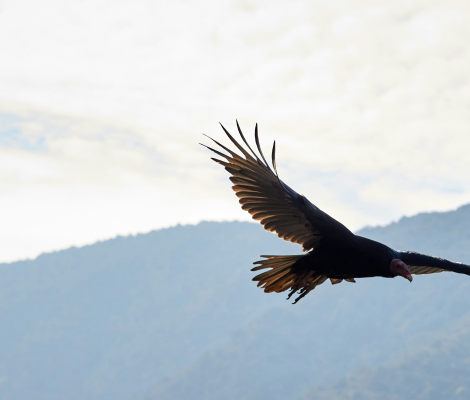
Gyps Vultures
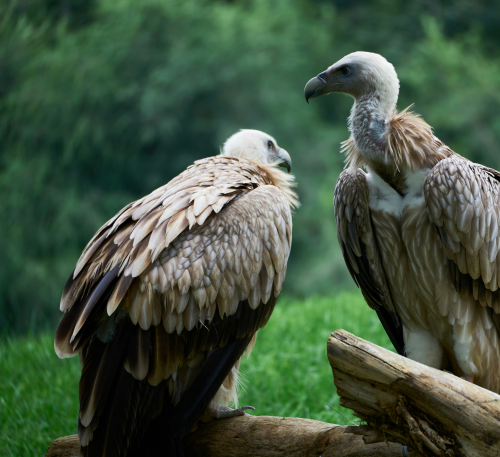
BNHS, with the help of the Government of India, State Forest Departments and Royal Society for the Protection of Birds, has scripted a success story in the conservation of Gyps Vultures namely Oriental White-backed Vulture Gyps bengalensis, Long-billed Vulture Gyps indicus and Slender-billed Vulture Gyps tenuirostris.
Background
The Gyps Vultures faced near-extinction owing to the use of diclofenac in treating livestock, which caused vultures to die when they fed on contaminated carcasses.
Breeding Centres
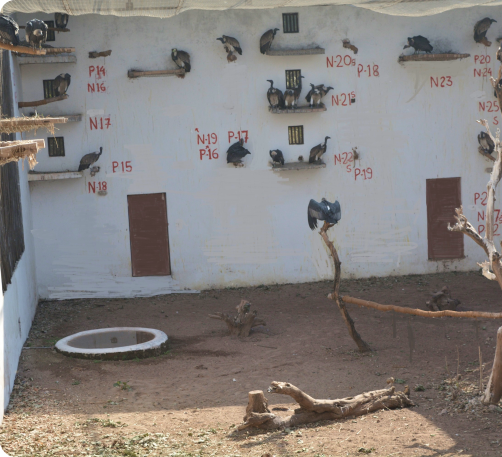
As a precaution against the three species going extinct, BNHS set-up four breeding centres for Gyps Vultures:
- Jatayu Conservation Breeding Centre, Pinjore, Haryana
- Vulture Conservation Breeding Centre, Rajabhatkhawa, West Bengal
- Vulture Conservation Breeding Centre, Rani, Assam
- Vulture Conservation Breeding Centre, Bhopal, Madhya Pradesh
Centre highlights: includes large flight aviaries, hospital and surgery rooms, pathology and genetics laboratories, food processing units, and quarantine facilities.
These centres have pioneered research on vulture biology and have successfully bred all three critically endangered Gyps species in captivity.
Vulture Safe Zones
These are areas where vulture populations are closely monitored and programmes are undertaken to ensure that domestic livestock carcasses are not contaminated with drugs toxic to vultures.
Vulture breeding programme
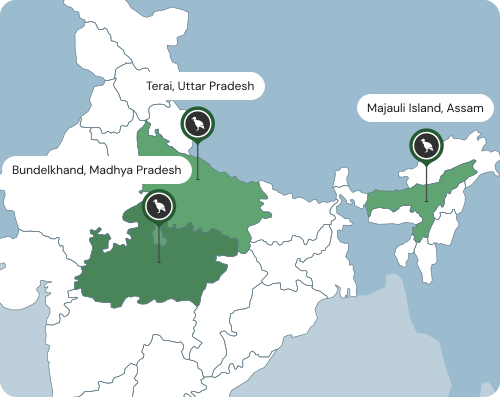
Selected regions in India — each covering about 30,000 sq. km. around Majuli Island in Assam, Terai region in Uttar Pradesh, Bundelkhand region in Madhya Pradesh — have been identified as potential Vulture Safe Zones (VSZs) for vultures in the wild. We closely monitor the areas within 100 km of the VSZs to ensure that the food and habitats available for the vultures are sufficient and safe.
Over the year, we conducted targeted programmes around the VSZs to raise awareness against NSAIDs toxic to the vultures. The sessions have focused on the need to ban other NSAIDs like ketoprofen and aceclofenac in veterinary use as they too are found to be toxic to vultures. Forest department trainees, veterinarians, students, wildlife enthusiasts and other stakeholder are familiarized from time to time with ex situ conservation methods.
Impact
- Every year sees new fledglings and by 2019, over 600 vultures had been successfully reared in the four centres. The stage is now set for the captive-bred vultures to be released into the wild.
- Responding to a BNHS campaign against the drug, the Government of India banned its veterinary use in the country in 2006 – Download report 3
- Diclofenac availability reduced from 49% -> 23% in Bundelkhand region
- Near-zero diclofenac use observed in the Kaziranga National Park region
- In UP VSZ, vultures tagged in the neighbouring Nepal too were found visiting the region, which calls for intensified advocacy and awareness efforts.